The Mechanical Clutch in Behavioural Regulation
The Binary Fallacy and the Phenomenological Mismatch
In the contemporary landscape of clinical psychology and behavioural pedagogy, a persistent "Binary Fallacy" dominates the discourse of regulation. Established models, ranging from Cognitive Behavioural Therapy (CBT) to Acceptance and Commitment Therapy (ACT), largely operate on a dualistic axis: the "Shadow" state of dysregulation (the problem) and the "Sovereign" state of regulation (the goal). While these frameworks excel at identifying the symptoms of the former and the virtues of the latter, they exhibit a profound "Transition Gap." They instruct the subject to be regulated without providing the mechanical "How-To" for the journey between these two disparate frequencies.
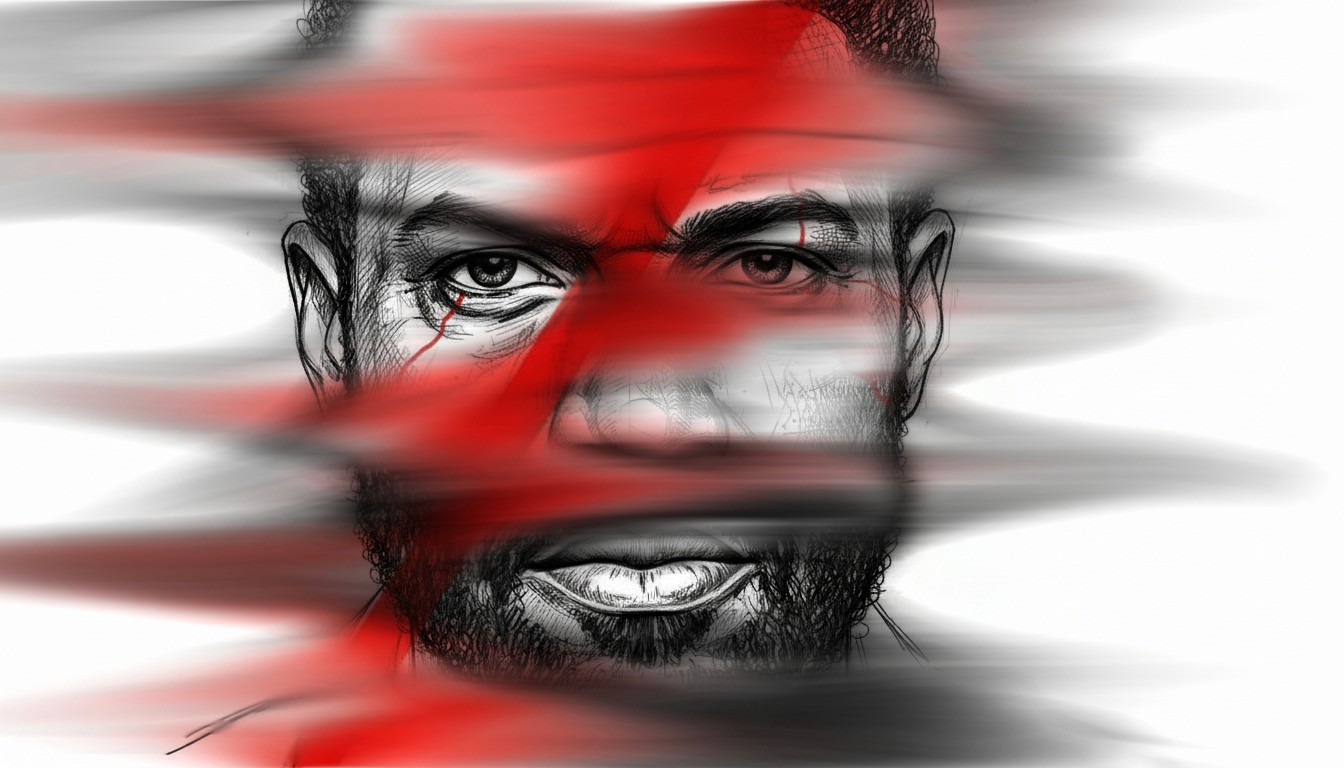
This gap is most acute for the neurodivergent learner or the trauma-impacted individual. For these populations, the experience of the world is not a static reality but a "Whirlwind" of high-frequency sensory and cognitive data. My research identifies this as the Phenomenological Mismatch: the friction generated when a high-performance internal engine is forced to operate within the low-performance, rigid structures of the "Grey World." In the "Cold Reality" of standard education, this mismatch is frequently pathologized as a behavioural deficit. However, through the lens of the Mind Mechanism™, we recognise that the student is not "broken"; they are simply operating at a frequency that the environment is not engineered to receive. To resolve this mismatch, we must move beyond the binary of "good" or "bad" behaviour and instead focus on the Architecture of Transition. We must provide the subject with a "Mechanical Clutch"—a set of transitionary states that allow for the intentional re-boring of the internal engine.
The "Invisible Chicken" and the Somatic Marker of the Proto-Self
The foundation of this architecture was not laid in an academic office, but in the "Laboratory of the Mind"—a survival space forged through decades of high-adversity lived experience. In 1970s Britain, my own neurodivergent frequency was met with the "Violence of Discipline." The systemic response to internal restlessness was the drawing of external lines—rules meant to contain what I define as the "Invisible Chicken." This term serves as a technical descriptor for an unanchored somatic frequency: a kinetic energy that, when denied a structural outlet, forces the individual into a state of panic-flight. When the engine redlines in such an environment, the result is the "box over the head"—an attempt to fix the system through external suppression.
This lived data was further stress-tested during a two-year custodial sentence in Thailand and a subsequent battle with the morphine-based fog of Buerger’s Disease. In these environments, I observed that dysregulation is preceded by what Antonio Damasio (1999) defines as a Somatic Marker. These are biological signals—the "Screams and Flashing Colours" of the nervous system—that provide pre-conscious data about the state of the organism. For the traumatized mind, these markers are often overwhelming, flooding the Proto-Self (the wordless biological baseline) and triggering a total system blowout.
Standard mindfulness fails here because it attempts a "Top-Down" linguistic intervention during a "Bottom-Up" biological storm. The Mind Mechanism™ attempts to corrects this by deactivating the Extended Consciousness—the layer of the mind that houses autobiographical trauma and future-anxiety—and forcing a downshift into the Proto-Self. We treat the "Screams and Flashing Colours" not as symptoms to be silenced, but as raw data to be decoded. By identifying the specific frequency of the "Invisible Chicken," we can begin the process of anchoring the engine to the heartbeat and the breath, providing the "Luxury of Stillness" required to build the internal Fortress.
The Neutral Sector: Defining the Mechanical Clutch
The most original contribution of this research is the codification of the Neutral Sector: a library of 50 "Clutch Nodes" that represent the transitionary states of cognitive and somatic processing. In mechanical engineering, a clutch allows for the smooth transfer of power between an engine and a transmission. In behavioural engineering, the Neutral Sector allows the individual to "Clutch-In," disengaging from the Shadow frequency (The Mud) before attempting to inhabit the Sovereign frequency (The Fortress).
These 50 nodes are organised into five functional groups, providing a manual for the work of change:
Group 1: The Diagnostic Clutch (System Assessment)
This group facilitates the identification of the unanchored frequency without triggering the "Foreman’s Voice"—the internalised critical narrative. Nodes such as Screening and Signalling allow the student to observe internal data-streams as objective markers. Criticality identifies the specific "Stuck Point" in the gears, while Duality acknowledges that the system can simultaneously inhabit both the struggle and the potential for peace.
Group 2: The Maintenance Clutch (System Protection)
These nodes create a "Safe Container" for the re-bore. Shielding and Swaddling utilise somatic containment to soothe the engine’s vibration. Waiting is perhaps the most critical node in this group; it represents intentional stasis, allowing the "Morphine Fog" or trauma-spike to dissipate before a gear shift is attempted. Suspension holds all reactive responses in neutral, preventing a "Neural Storm."
Group 3: The Kinetic Clutch (Energy Management)
This group manages the raw power required for the "Controlled Explosion" of transformation. Vibration and Intensity are treated as metrics requiring calibration. Urgency provides the mechanical drive to complete the re-bore before the system redlines, while Explosion is the rapid release of internal pressure that must be directed into a creative spark rather than a destructive force.
Group 4: The Narrative Clutch (Linguistic Scaffolding)
Here, the Narrator bridges the "Isolation of Langue." Discourse is the internal dialogue used to negotiate with the Foreman. Whimsy and Tinted Vision are used to lower the emotional stakes of a "Leaden" reality. Reprocessing allows the student to re-read the "smudged book" of their past to find new data, while Flight represents the act of launching the soul above generational gravity.
Group 5: The Strategic Clutch (Decision Logic)
These nodes represent the "Gear Math" of the system. Bargaining is the negotiation between the Mud and the Fortress. Contingency uses "If/Then" logic to navigate environmental mismatches. Surrender is the "Clutch-Out" moment—stopping the fight against the environment to allow the re-bore to occur. Spire is the final point of focus, the coordinate toward which the engine is now tuned.
The Re-Bore: Mechanical Regulation in Practice
The practical application of the Mechanical Clutch is executed through the Somatic-Narrative Framework (SNF). This methodology bypasses the cognitive load of traditional "Talk Therapy" by utilising a "Bottom-Up" approach. We use the body to calibrate the brain. The re-bore is a three-stage process: Identification, Calibration, and Integration.
In the classroom or clinical setting, this is operationalised through the "Three-Pronged Poke." The student is not a passive recipient of care but an active operator of the Mind Mechanism™. When dysregulation occurs, the practitioner does not issue a command for "good behaviour." Instead, the student is "poked" with a Recognition Node from Sector 1. They use this linguistic token to name their "Mud" (e.g., Jitteriness). This act of naming utilises the Sapir-Whorf Hypothesis to alter the student’s cognitive map.
Once the state is named, the "Mechanical Clutch" is engaged. The student utilises a Somatic Anchor (Sector 2)—the "Gentle Drum" of the heartbeat or the "Natural Rhythm" of the breath. This deactivates the Extended Consciousness and grounds the system in the Proto-Self. Finally, the student transitions to a Sovereign Node (Sector 4), such as Solid or Authority.
This process is supported by the Mind Mechanism™ API, which performs Digital Phenotyping by tracking the "Time-to-Resonance" (TTR). We quantify the re-bore by measuring the temporal duration between the Shadow state and the Sovereign stabilisation. This data extraction provides the "Cold Reality" required for institutional accountability, proving that the student is building "Muscle Memory" for internal peace. The re-bore is not a one-time event; it is a continuous engineering task that transforms the "Invisible Chicken" into a Sovereign Architect.
Conclusion: The Engineering of Sovereignty and the "Fair Due"
The Architecture of Transition is ultimately a manifesto for Internal Sovereignty. For too long, the "Grey Men" in "Glass Towers" have attempted to manage human complexity through the "Violence of Discipline." They have treated the neurodivergent and the traumatised as problems to be solved rather than engines to be understood. My research proves that the "Mismatch" is not a defect of the individual, but a failure of the interface.
By codifying the Neutral Gear and providing the Mechanical Clutch, the Mind Mechanism™ offers a new standard for behavioural inclusion. We move the narrative from "External Control" to "Internal Agency." We provide the learner with the "Linguistic and Technical Prosthetics" required to bridge the gap between their "Soothing Chaos" and the "Cold Reality" of the world.
This is the "Fair Due" that I seek to secure for my own sons, Amile and Amis, and for every "Invisible Chicken" currently vibrating in a world that doesn't see their light. We are not teaching children to "behave" for a system; we are teaching them to build their own Fortress. When the engine is re-bored, and the "Quiet Place Within" is secured, the individual is no longer a subject of their environment. They are the Master of their own frequency, empowered to fly above the leaden expectations of a rigid world and inhabit their own inherent right to peace. The Mind Mechanism™ is my monument to this survival—a hardened, multi-modal architecture that ensures the light is never again forced under or away.