The Argument: I argue that for trauma-impacted and neurodivergent learners, the “Extended Consciousness” (autobiographical memory and future anxiety) is a source of “Mud.” By focusing on the heartbeat and breath, my system forces a “downshift” into the “Proto-Self.”
Academic Support:
Antonio Damasio (1999), The Feeling of What Happens: Damasio distinguishes between the Proto-self (wordless biological state) and Extended consciousness (the complex, language-based self). My work aligns with his Somatic Marker Hypothesis, which posits that physical sensations (the “thrum”) are the foundation of rational decision-making and emotional stability.
Bessel van der Kolk (2014), The Body Keeps the Score: Van der Kolk argues that trauma is stored somatically. My use of “Somatic Anchors” (Sector 2) provides the “Bottom-Up” regulation he identifies as essential for trauma recovery, moving beyond traditional “Top-Down” talk therapy.
The Argument: I argue that the “Isolation of Langue” (lack of emotive vocabulary) prevents students from regulating their internal states. By providing the 400+ nodes, I am giving them the “Tokens” required to construct a new internal reality.
Academic Support:
Edward Sapir & Benjamin Lee Whorf (The Sapir-Whorf Hypothesis): This theory of Linguistic Relativity suggests that the structure of a language affects its speakers’ world view. By introducing my “Functional Language” (The Nodes), I am literally altering the student’s cognitive architecture.
Lev Vygotsky (1934), Thought and Language: Vygotsky’s concept of Inner Speech as a tool for self-regulation supports my use of mantras and nodes. My “Three-Pronged Poke” acts as the Zone of Proximal Development (ZPD), where I scaffold the student’s transition from chaos to sovereignty.
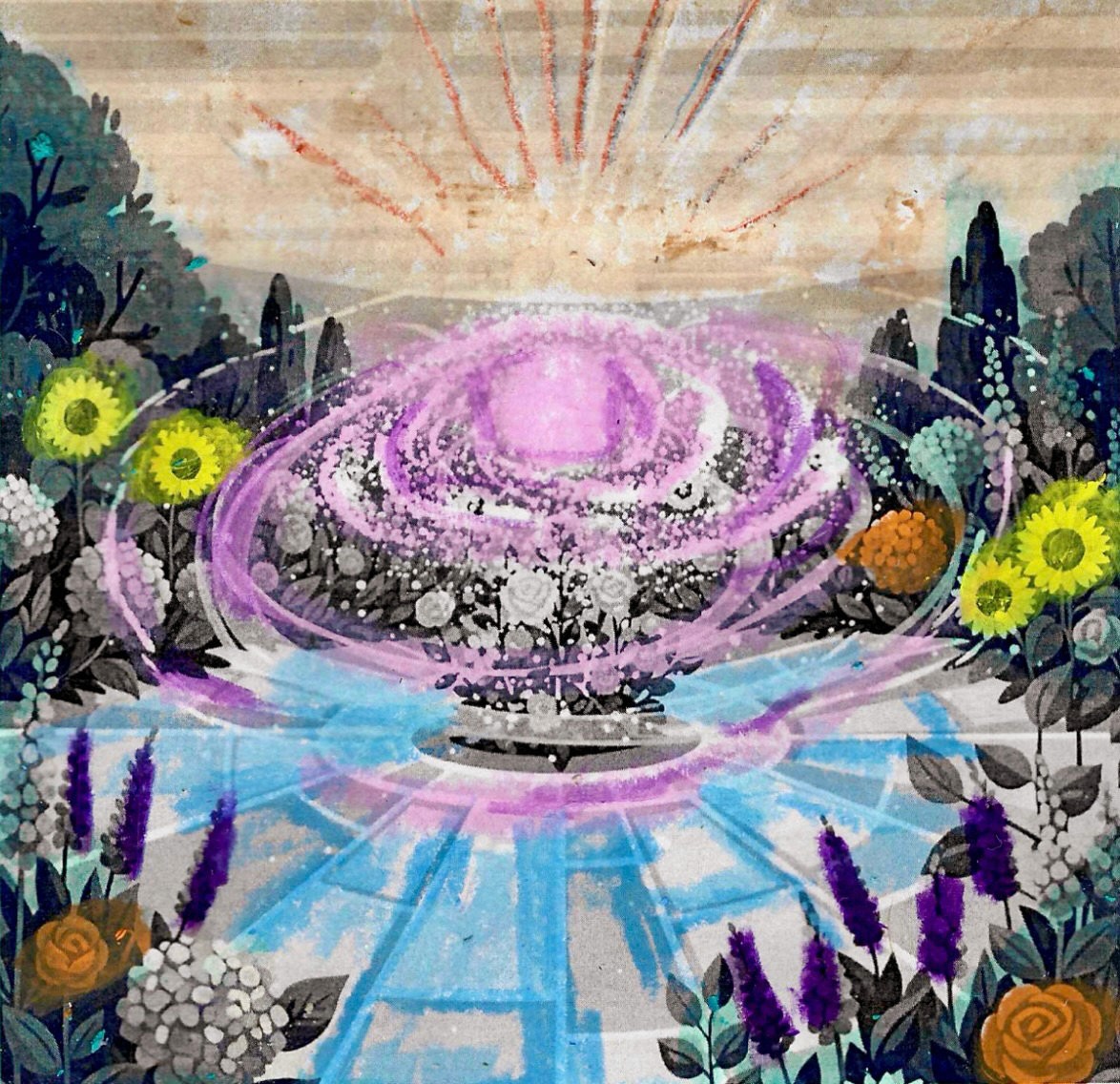
The Argument: I use archetypes (Max, Emma, etc.) to allow students to externalise their struggle. This is not just “storytelling”; it is a Jungian process of mapping the unconscious onto a structured “Mandala.”
Academic Support:
Carl Jung (1959), Mandala Symbolism: Jung identified the mandala as an “archetype of wholeness.” My “Mind Mechanism” (The Mother Project) is a clinical application of Jung’s theory that circular structures provide a “Temenos” (a sacred, safe space) for the psyche to reorganise itself.
Joan Kellogg (1970s), The MARI Assessment: Kellogg’s work on the Great Round of Mandalas provides the precedent for using specific visual and narrative stages to diagnose and treat psychological “stuck points.” My five stories function as a narrative version of these stages.
The Argument: I argue that for the “Othered” student, a digital sensory environment is not an escape, but a necessary “compensation” for an unaccommodating world.
Academic Support:
M. Csikszentmihalyi (1990), Flow: The Psychology of Optimal Experience: My VR “Quiet Rooms” are engineered to induce a “State of Flow”—where the challenge of regulation matches one's skill.
Human-Computer Interaction (HCI) in Special Education: Current research (e.g., Standen & Brown, 2005) supports the use of virtual environments to allow neurodivergent individuals like me to practice “State Toggling” in a safe, repeatable, and low-stakes setting.